Rule #1
Tuesday, December 15, 2009
Thursday, December 3, 2009
Mr Cohen
Some years back, I was working for the inestimable Mr Ross Gibson at the Australian Centre for the Moving Image. At the time, I was obsessed with Instrument, a feature length film directed by Mr Jem Cohen about Washington band Fugazi (about who, to this day, I am still an obsessive nutjob). To me, it is one of the great music documentaries if not one of the best films about creativity, resistance, independence and defiance. One day, Mr Ross Gibson asked me to track down and acquire all of Mr Jem Cohen's films for the ACMI collection. I knew at that point that Cohen had directed a whole bunch of other flicks as well as Instrument but I had not, at that point, seen any of these flicks. Over the following weeks I would receive little boxes of VHS goodness from Video Data Bank, one of the unsung heroes of truly independent film and video. During those days, my mind was blown wide open by films like Buried in Light (Eastern Europe in Passing), Blood Orange Sky and the enigmatic and brilliant Lost Book Found.
(Below is a dodgy 10 minute excerpt from the film that some connoisseur has posted on Youtube. If you dig, please hit up VDB and get a DVD or VHS of it. You won't regret it.)
In addition, one of the more beautiful things I discovered during that time was his compendium film 'Just Hold Still' featured on VDB's 'Early Works'. 'Just Hold Still' includes a collection of ephemeral but precise works like 4:44 (From Her House Home), Drink Deep and this one, Never Change.
(As above re: dodginess and digging.)
His other short works around this time include numerous musical collaborations with folks like Chan Marshall, Butthole Surfers and Jonathon Richman. Among these is the performance/portrait/film Lucky Three with the late, great Elliott Smith which, to me, as a film about the wonder of distilled songs in their entirety, is only matched by Wim Wenders' incredible early short, Three American LPs.
(Again, apologies for low resolution youtube shittiness and, as above, re: dodginess etc) -
I would be lying if I said that all of these films, as well as The Hundred Videos by Steve Reinke and the work of other filmmakers like Sadie Benning and Matthias Muller didn't influence me in wanting to make smaller, personal film and video works (hence, The Buoy Archives). Suffice, to say, when Jem Cohen finally arrived in Melbourne for a screening of Benjamin Smoke and to preview some of his work installed in the ACMI gallery, I descended on him like a rabid, sycophantic maniac. The good side of it was that I ended up driving him around in my old 1982 Blue Urvan* (expansive wide windows for excellent camera coverage) while he filmed some local material for the film Chain and I also got to do this essay and interview for Senses of Cinema:
Just Hold Still: A Conversation with Jem Cohen
Anyway, the point of all this is not that I am a complete fanboy, which I am, but that, if you've seen the film Instrument, you'll recall some of Fugazi's killer onstage banter ("we smashed that damn monkey", "ice cream eating motherfuckers" et al.) Over at Chunklet, there is a great little blog and a link to a 45 minute recording of onstage banter from Mackaye & Picciotto.
Having Fun with Fugazi on Stage
*This beautiful piece of auto-machinery has since been stolen by someone with a clear interest in rust, baby blue duco or bald tyres. I dream of it every day and wish it back. Muthafucka.
(Below is a dodgy 10 minute excerpt from the film that some connoisseur has posted on Youtube. If you dig, please hit up VDB and get a DVD or VHS of it. You won't regret it.)
In addition, one of the more beautiful things I discovered during that time was his compendium film 'Just Hold Still' featured on VDB's 'Early Works'. 'Just Hold Still' includes a collection of ephemeral but precise works like 4:44 (From Her House Home), Drink Deep and this one, Never Change.
(As above re: dodginess and digging.)
His other short works around this time include numerous musical collaborations with folks like Chan Marshall, Butthole Surfers and Jonathon Richman. Among these is the performance/portrait/film Lucky Three with the late, great Elliott Smith which, to me, as a film about the wonder of distilled songs in their entirety, is only matched by Wim Wenders' incredible early short, Three American LPs.
(Again, apologies for low resolution youtube shittiness and, as above, re: dodginess etc) -
I would be lying if I said that all of these films, as well as The Hundred Videos by Steve Reinke and the work of other filmmakers like Sadie Benning and Matthias Muller didn't influence me in wanting to make smaller, personal film and video works (hence, The Buoy Archives). Suffice, to say, when Jem Cohen finally arrived in Melbourne for a screening of Benjamin Smoke and to preview some of his work installed in the ACMI gallery, I descended on him like a rabid, sycophantic maniac. The good side of it was that I ended up driving him around in my old 1982 Blue Urvan* (expansive wide windows for excellent camera coverage) while he filmed some local material for the film Chain and I also got to do this essay and interview for Senses of Cinema:
Just Hold Still: A Conversation with Jem Cohen
Anyway, the point of all this is not that I am a complete fanboy, which I am, but that, if you've seen the film Instrument, you'll recall some of Fugazi's killer onstage banter ("we smashed that damn monkey", "ice cream eating motherfuckers" et al.) Over at Chunklet, there is a great little blog and a link to a 45 minute recording of onstage banter from Mackaye & Picciotto.
Having Fun with Fugazi on Stage
*This beautiful piece of auto-machinery has since been stolen by someone with a clear interest in rust, baby blue duco or bald tyres. I dream of it every day and wish it back. Muthafucka.
Labels:
ACMI,
Chunklet,
Elliott Smith,
Fugazi,
Instrument,
Jem Cohen,
Matthias Muller,
Ross GIbson,
Steve Reinke
Titles #1
It's a tricky thing thinking up a fine title for a flick or a piece of writing. Film titles, in particular, are always so freaking sensible and informative. I've always thought a title should add a whole new layer to a film. A little mirror that reflects light onto the film from somewhere outside the world of the story. I think there is a lot that the record sleeves of post rock and p-funk albums can teach us.
Here are some of my favourites:
"Bill's Mom Likes to Fuck" - A Minor Forest
"Vanish in our Sleep" - Bootsy's Rubber Band
"You Drink a Lot of Coffee for a Teenager" - Don Caballero
"(You're A Fish And I'm A) Water Sign" - Parliament
"When in Doubt: Vamp" - Fred Wesley and the Horny Horns
"A Tender History in Rust" - Do Make Say Think
"You and your folks, me and my folks" - Funkadelic
"Hang onto Each Other" - A Silver Mt Zion
"Never buy Texas from a Cowboy (Part 1)" - Brides of Funkenstein
Here are some of my favourites:
"Bill's Mom Likes to Fuck" - A Minor Forest
"Vanish in our Sleep" - Bootsy's Rubber Band
"You Drink a Lot of Coffee for a Teenager" - Don Caballero
"(You're A Fish And I'm A) Water Sign" - Parliament
"When in Doubt: Vamp" - Fred Wesley and the Horny Horns
"A Tender History in Rust" - Do Make Say Think
"You and your folks, me and my folks" - Funkadelic
"Hang onto Each Other" - A Silver Mt Zion
"Never buy Texas from a Cowboy (Part 1)" - Brides of Funkenstein
Wednesday, December 2, 2009
Lists #1
I have been completely (intentionally?) overlooking the fact that we are at decade's end until all of a sudden blogs and critics and peeps everywhere started compiling best films of the decade lists. I love a list but I can't even imagine where to start on such a mammoth task given my generally poor memory for what I liked or didn't, loved or didn't. Over at Fin de Cinema, Joe Bowman has been writing and reprising critiques of what he thinks are the films of the decade and his lists are killer.
Decade List
I am loving spending far too much time getting lost in his listings, if only because it's making me wish I was seeing many of these films for the first time again (he also links through to the great top tens of the year from John Waters and Chrissie Iles). I'm sure there are many more bloggers doing the same decade long thing but I'm afraid of looking further. As it is, time is slipping away and with gargantuan observational doco edits to complete and years to finish and new decades to start, so things are looking a little frantic for repeat viewings of old favourites.
Decade List
I am loving spending far too much time getting lost in his listings, if only because it's making me wish I was seeing many of these films for the first time again (he also links through to the great top tens of the year from John Waters and Chrissie Iles). I'm sure there are many more bloggers doing the same decade long thing but I'm afraid of looking further. As it is, time is slipping away and with gargantuan observational doco edits to complete and years to finish and new decades to start, so things are looking a little frantic for repeat viewings of old favourites.
Felllow Travellers #4
Warning: Shameless but well deserved promotion of fellow travellers ahead...
Some damned fine peeps have just released outrageously good looking DVD releases of their films with sexy booklets, lots of additional lushness and a thousand extra reasons to buy, watch and rewatch films that are already infinitely worthy of watching.
Compañero Glendyn Ivin's feature drama Last Ride (which scored him a best director award - and props from Abbas Kiarostami, no less - at the recent Abu Dhabi Film Festival) has been released by Madman. I have to declare a conflict of interest as I photographed the poster art for Last Ride.
I also took some other behind the scenes snaps, some of which have snuck into the booklets and promo releases for the film, which allows me an excellent dose of reflected glory without really doing anything at all.
You can also see, as part of this release, the great behind the scenes doco made by the most excellent Tim Mummery and Jono Hill of Yeah Right. Here, you can see a short vid of G's own excitement at the DVD release. Also at his blog, Glendyn has heaps of great process based stuff on the making of the film as well as numerous lush pics taken during the production by people like Greig Fraser, Ari Wegner and Glendyn himself.
Compañero Amiel Courtin-Wilson and Compañera Philippa Campey have also just released, through Siren Visual, the DVD for Bastardy, one of my, and many other folks, favourite flicks of the year.
Again, it's insanely desirable with a lush booklet and lots of additional goodies. Amiel is one of those filmmakers with a thousand projects under his belt and a thousand more on the go so, not surprisingly, it includes two additional films by him, 'Steal Away Home' and the Cannes short 'Cicada'. Finally, the booklet includes a great essay by Compañero Christos Tsiolkas. Many folks have read Christos' novels but if you haven't read his essays - including the book length The Devil's Playground (the first few pages of which you can see here) or Jump Cuts with Sasha Soldatow, you may not be aware of what a formidable intellectual he is, along with an incendiary storyteller. So, good times for us all. Now, just gotta find some cold hard cash to pick up a few copies.
Some damned fine peeps have just released outrageously good looking DVD releases of their films with sexy booklets, lots of additional lushness and a thousand extra reasons to buy, watch and rewatch films that are already infinitely worthy of watching.
Compañero Glendyn Ivin's feature drama Last Ride (which scored him a best director award - and props from Abbas Kiarostami, no less - at the recent Abu Dhabi Film Festival) has been released by Madman. I have to declare a conflict of interest as I photographed the poster art for Last Ride.
I also took some other behind the scenes snaps, some of which have snuck into the booklets and promo releases for the film, which allows me an excellent dose of reflected glory without really doing anything at all.
You can also see, as part of this release, the great behind the scenes doco made by the most excellent Tim Mummery and Jono Hill of Yeah Right. Here, you can see a short vid of G's own excitement at the DVD release. Also at his blog, Glendyn has heaps of great process based stuff on the making of the film as well as numerous lush pics taken during the production by people like Greig Fraser, Ari Wegner and Glendyn himself.
Compañero Amiel Courtin-Wilson and Compañera Philippa Campey have also just released, through Siren Visual, the DVD for Bastardy, one of my, and many other folks, favourite flicks of the year.
Again, it's insanely desirable with a lush booklet and lots of additional goodies. Amiel is one of those filmmakers with a thousand projects under his belt and a thousand more on the go so, not surprisingly, it includes two additional films by him, 'Steal Away Home' and the Cannes short 'Cicada'. Finally, the booklet includes a great essay by Compañero Christos Tsiolkas. Many folks have read Christos' novels but if you haven't read his essays - including the book length The Devil's Playground (the first few pages of which you can see here) or Jump Cuts with Sasha Soldatow, you may not be aware of what a formidable intellectual he is, along with an incendiary storyteller. So, good times for us all. Now, just gotta find some cold hard cash to pick up a few copies.
Labels:
Amiel Courtin-Wilson,
Bastardy,
Glendyn Ivin,
Last Ride,
Philippa Campey
Tuesday, December 1, 2009
On Gifts #1
Many years back I made a small Buoy Archive (which shall forever remain hidden) with a one chip video recording of a high school performance by a punk band that my brother had formed which was killing it in the youth clubs around Canberra. They were having so much fun just creating together, as kids, as fellow musicians and playing to other people as a gift, expecting nothing in return, that I was completely reinvigorated and inspired. It felt, in that high school moment, something like this overused old quote from Lester Bangs:
On the other hand, there is another approach to film, which is all about giving. I don't know if generosity is necessarily Bangs idea of rock'n'roll but, strangely, in this day and age it feels like it. What if you make something in that spirit of offering up an experience for the joy of the people sitting in the room with you... the room being any audience and you being the film itself. I love to watch a band play and love those moments when you know that they are sharing the experience as intensely as the audience is. Their songs come alive in the eyes of the people who love to experience them in the flesh. Films don't often give you that buzz that comes from a filmmaker knowing they are giving it up to you, inviting you in, letting you be a part of the creation. Instead films are bigger, flashier and smarter (or dumber) than us and we can't give them anything back except for a ticket price. We certainly can't give them our fanaticism or our hearts.
I loved the anthropologist Marcel Mauss' book 'The Gift'. In it he explored the ways that many preindustrial societies relied on the gift as a form of expanding their social and intercommunal relations. A gift given was a complex thing which metonymically embodied social, communal, emotional, spiritual and economic relationships with the recipient. The gift encouraged reciprocity which strengthened the ties between the giver and the recipient both individually and culturally.
Apologies to Mauss and anyone who has studied ethnography but, to my mind, the communal arts like music and film can and sometimes do work in this way. Of course, commercialism kills this, but so do filmmakers who don't think of what they do as offering a gift to their audience. A film can be an offering of enormous complexity that invites the recipient to reciprocate, either through inspiration, through high expectations, through inserting themselves deep within the film experience, through love of the experience or through taking the film out into the world with them. It communicates something of the world it comes from and embodies values and experience and philosophy as well as the emotions, narrative and character insights that sustain any storytelling form.
It would be a beautiful thing to see a film and feel it is a gift. Recently, in domestic cinema Samson and Delilah felt like this. Bastardy, too. Internationally? 35 Shots of Rum. Ballast. I'm struggling here.
One of the reasons T and I have spent much of the past few years making two enormously demanding feature music docos is to extend the gift of what the music and the musicians give to us. I sometimes think I should be spending more time on writing and making fiction but it is so hard to resist making these flicks when there is so much joy to be had in them. I am kinda snobby about the music I listen to but I have a much looser love of any music that is made with generous creativity. One of the reasons we made Words from the City was that, at the time we made it, Australian hip hop MCs were in this incredible period of making music that was an open, evolving form. It had more punk attitude than any of the punk I was hearing but also expected the audience to give back, to demand more, to expect more. Likewise, we have spent three years making Murundak after first seeing the Black Arm Band play together and realising their gathering, their songs, were an invitation to be a part of something. Those songs were a gift. We hope that the film will be our reciprocity.
"Good rock 'n' roll is something that makes you feel alive. It's something that's human, and I think that most music today isn't. ... To me good rock 'n' roll also encompasses other things, like Hank Williams and Charlie Mingus and a lot of things that aren't strictly defined as rock 'n' roll. Rock 'n' roll is an attitude, it's not a musical form of a strict sort. It's a way of doing things, of approaching things. Writing can be rock 'n' roll, or a movie can be rock 'n' roll. It's a way of living your life."It is so incredibly hard to find this attitude in filmmaking, and in Australian filmmaking specifically. There is so much expectation of what the film (the product, the content) will bring back to the filmmakers that the actual act of offering up a joyous creative experience as a gift to your audience has been deadened. Why can't a film be an immersive sensory or pleasure based experience in the same way as seeing your favourite band in your favourite venue is? Why can't there be enough attitude, joy and generosity in the act of making the film that the audience can't help but be buoyed by the experience of watching it? Instead, we strategise how a film will take us, the filmmakers, somewhere else - status, reputation, critical acclaim, Hummers. What the act of making the film will return to us. It is no surprise that the local discussion of film has become totally hijacked into a discussion of financial 'returns'.
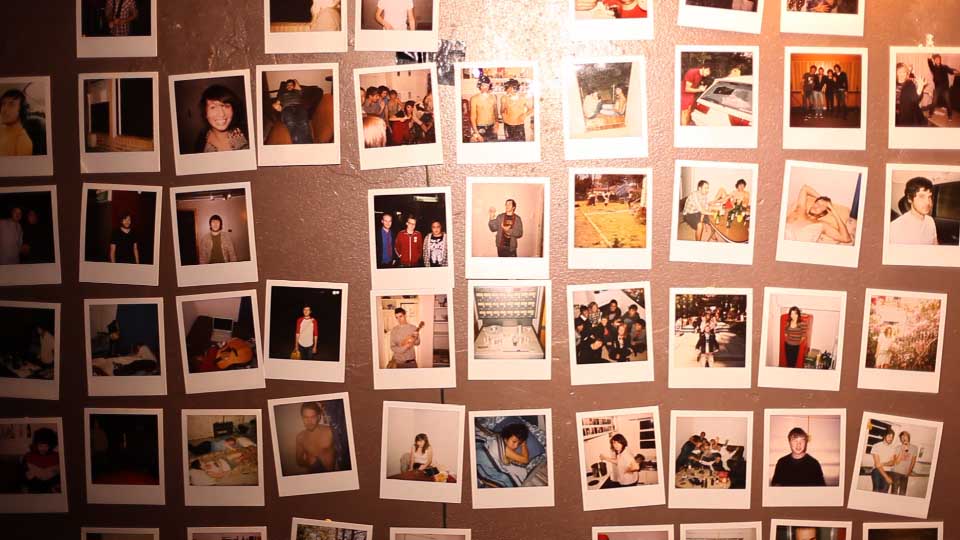
On the other hand, there is another approach to film, which is all about giving. I don't know if generosity is necessarily Bangs idea of rock'n'roll but, strangely, in this day and age it feels like it. What if you make something in that spirit of offering up an experience for the joy of the people sitting in the room with you... the room being any audience and you being the film itself. I love to watch a band play and love those moments when you know that they are sharing the experience as intensely as the audience is. Their songs come alive in the eyes of the people who love to experience them in the flesh. Films don't often give you that buzz that comes from a filmmaker knowing they are giving it up to you, inviting you in, letting you be a part of the creation. Instead films are bigger, flashier and smarter (or dumber) than us and we can't give them anything back except for a ticket price. We certainly can't give them our fanaticism or our hearts.
I loved the anthropologist Marcel Mauss' book 'The Gift'. In it he explored the ways that many preindustrial societies relied on the gift as a form of expanding their social and intercommunal relations. A gift given was a complex thing which metonymically embodied social, communal, emotional, spiritual and economic relationships with the recipient. The gift encouraged reciprocity which strengthened the ties between the giver and the recipient both individually and culturally.
Apologies to Mauss and anyone who has studied ethnography but, to my mind, the communal arts like music and film can and sometimes do work in this way. Of course, commercialism kills this, but so do filmmakers who don't think of what they do as offering a gift to their audience. A film can be an offering of enormous complexity that invites the recipient to reciprocate, either through inspiration, through high expectations, through inserting themselves deep within the film experience, through love of the experience or through taking the film out into the world with them. It communicates something of the world it comes from and embodies values and experience and philosophy as well as the emotions, narrative and character insights that sustain any storytelling form.
It would be a beautiful thing to see a film and feel it is a gift. Recently, in domestic cinema Samson and Delilah felt like this. Bastardy, too. Internationally? 35 Shots of Rum. Ballast. I'm struggling here.
One of the reasons T and I have spent much of the past few years making two enormously demanding feature music docos is to extend the gift of what the music and the musicians give to us. I sometimes think I should be spending more time on writing and making fiction but it is so hard to resist making these flicks when there is so much joy to be had in them. I am kinda snobby about the music I listen to but I have a much looser love of any music that is made with generous creativity. One of the reasons we made Words from the City was that, at the time we made it, Australian hip hop MCs were in this incredible period of making music that was an open, evolving form. It had more punk attitude than any of the punk I was hearing but also expected the audience to give back, to demand more, to expect more. Likewise, we have spent three years making Murundak after first seeing the Black Arm Band play together and realising their gathering, their songs, were an invitation to be a part of something. Those songs were a gift. We hope that the film will be our reciprocity.
DIY #1
There's DIY and there's DIY. I'm not much for bangs and whistles at the best of times but in shooting a music video for Kempsey's new DIY ep - recorded in the basement, mastered in a back shed - I like to think we took our production to a new level of 'stripped back'. T and I flew to Canberra for 3 consecutive night shoots with two 50mm lenses, two 5D bodies, two cheap on-camera LED lights and shot the living hell out of the city and a raucous crew of cohorts. It was exhausting but about as much fun as the lumbering juggernaut that is filmmaking can be. Messy, impulsive, joyous. Seize the night.
Labels:
DIY,
Kempsey,
photographs
NYC hearts Wiseman
It's hard not to wish you were there... Thanks Back Row Manifesto blogger.
Faith in Humanity Temporarily Restored.
Labels:
Frederick Wiseman,
The Back Row Manifesto
Monday, November 30, 2009
On Staring #5
"The question is not what you look at, but what you see." - Henry David ThoreauOkay. So it is a bit of a pithy, overused quote, but really, when it comes to thinking about making films, is there a better aphorism to think on? Bresson can throw up a couple I am sure, but this is always my touchstone when things fall apart.
Friday, November 20, 2009
Loud Quiet Loud
I got a crazy thing for novelists who write like guitars. Hammering out, wailing, ripping out solos, then settling back into feedback or quiet strumming or long passages of melody or backing chords. A friend and I used to go nuts for Jim Thompson, trying to find his best possible phrasing, his sentences that kicked you so hard in the guts you had to reread them over and over just to feel their impact each time*. Don DeLillo is, for me, another writer who can lull you into the languor of some deep thought or exploration only to tear you out again with one quietly delivered, heartstopping, clipped phrase that stops you in your tracks.
I think this kind of writing (combined with a long life of listening to the loud quiet loud rhythms of indie and punk) has shaped, to many extents, the kind of editing or film forms that I like. 'Pain is just another form of information' is a sentence that arrested me while reading DeLillo's 'Underworld'. The 'Pain' comes out of the preceding paragraph like a jumpcut, then there is the slow resound of the rest of the sentence that, at first seems like a glib exercise in style and cleverness, but slowly compounds into an idea you can't shake. This, to me, is like a great edit, that throws you hurtling into the next idea, but then follows any visual violence with languour to allow the severance to settle once again. DeLillo even alludes to the visual nature of his language when he says "I like the construction of sentences and the juxtaposition of words-not just how they sound or what they mean, but even what they look like..." ('Conversations with DeLillo', Thomas DePietro) Or this:
Edit like words, like language:
Although understated, this relationship-severing edit in this clip from 'Climates', when seen in the context of the meditative pace of this film, was jarring and brilliant. For a moment the world of the film condenses and, in doing so, expands immeasurably. Swoon.
Or the percussive awesomeness (that's the correct film theory terminology) of this well known scene from Tran Anh Hung's 'Xich Lo' (apologies for terrible compression and frame size but you take what you can get on youtube)...
Or the undulating loud, quiet, loud of the riverside house party in Lynne Ramsay's 'Morvern Callar' as you fall in and out of intensity. Severing our intimate perspective, for a moment, the film takes us out to a worker's barge who, by torchlight, passes by Morvern standing by the river, like an apparition, like a ghost, who, slowly raises her skirt then lowers it again, before throwing you back into the scene with a smashing bottle. Swoon.
Some editors strive for invisibility but I'll always be a front row audience for a bit of editorial showboating that reveals the mechanics of film, that riffs on a moment or a piece of action and lets the rhythm do the work.
* We finally had no choice but to settle on the final chapters of 'Savage Night'. Chapter Twenty Six concludes with the sentence "I went over backwards, then down and down and down, turning so slowly in the air it seemed that I was hardly moving. I didn't know it when I hit the bottom. I was simply there, looking up as I'd been looking on the way down. Then there was a slam and a click, and she was gone." before hurtling straight into the final two chapters:
I think this kind of writing (combined with a long life of listening to the loud quiet loud rhythms of indie and punk) has shaped, to many extents, the kind of editing or film forms that I like. 'Pain is just another form of information' is a sentence that arrested me while reading DeLillo's 'Underworld'. The 'Pain' comes out of the preceding paragraph like a jumpcut, then there is the slow resound of the rest of the sentence that, at first seems like a glib exercise in style and cleverness, but slowly compounds into an idea you can't shake. This, to me, is like a great edit, that throws you hurtling into the next idea, but then follows any visual violence with languour to allow the severance to settle once again. DeLillo even alludes to the visual nature of his language when he says "I like the construction of sentences and the juxtaposition of words-not just how they sound or what they mean, but even what they look like..." ('Conversations with DeLillo', Thomas DePietro) Or this:
"Every sentence has a truth waiting at the end of it and the writer learns how to know it when he finally gets there. One one level this truth is the swing of the sentence, the beat and poise, but down deeper it's the integrity of the writer as he matches with the language. I've always seen myself in sentences. I begin to recognize myself, word by word, as I work through a sentence."This approach makes sense to me because as much as there is a grammar of editing, a logic of information, of space and spatial relationship, there should also, always be the pleasure of the way an edit is assembled as a sequence itself. It's rhythm, it's inversions and trickery, and it's overall lilt and lean that encapsulates the indefinable heart of the film. Usually, when I have a 'swoon' moment when watching a film, it is usually because of exactly this kind of thing. When the edit, the assemblage jolts you for a moment, or gives you a moment of pure visual music or pleasure; it can be abrupt or gentle but just enough to startle you into enjoying the way things go.
Edit like words, like language:
Although understated, this relationship-severing edit in this clip from 'Climates', when seen in the context of the meditative pace of this film, was jarring and brilliant. For a moment the world of the film condenses and, in doing so, expands immeasurably. Swoon.
Or the percussive awesomeness (that's the correct film theory terminology) of this well known scene from Tran Anh Hung's 'Xich Lo' (apologies for terrible compression and frame size but you take what you can get on youtube)...
Or the undulating loud, quiet, loud of the riverside house party in Lynne Ramsay's 'Morvern Callar' as you fall in and out of intensity. Severing our intimate perspective, for a moment, the film takes us out to a worker's barge who, by torchlight, passes by Morvern standing by the river, like an apparition, like a ghost, who, slowly raises her skirt then lowers it again, before throwing you back into the scene with a smashing bottle. Swoon.
Some editors strive for invisibility but I'll always be a front row audience for a bit of editorial showboating that reveals the mechanics of film, that riffs on a moment or a piece of action and lets the rhythm do the work.
* We finally had no choice but to settle on the final chapters of 'Savage Night'. Chapter Twenty Six concludes with the sentence "I went over backwards, then down and down and down, turning so slowly in the air it seemed that I was hardly moving. I didn't know it when I hit the bottom. I was simply there, looking up as I'd been looking on the way down. Then there was a slam and a click, and she was gone." before hurtling straight into the final two chapters:
"TWENTY SEVEN
The darkness and myself. Everything else was gone. And the little that was left of me was going, faster and faster.
I began to crawl. I crawled and rolled and inched my way along; and I missed it the first time - the place I was looking for.
I circled the room twice before I found it, and there was hardly any of me then but it was enough. I crawled up over the pile of bottles, and went crashing down the other side.
And he was there, of course.
Death was there.
TWENTY EIGHT
And he smelled good."
Rules # 3
Rule #3 is that you have to make your own rules and tell everyone else to fuck off and find their own.
Through a confluence of information firing from blogs by David Liu and Caitlin Farren and old Moviemaker articles, I was lead to this killer bit of text from Mr Jim Jarmusch back in the dark ages of 2004 as published online. The original article is here.
There are no rules. There are as many ways to make a film as there are potential filmmakers. It’s an open form. Anyway, I would personally never presume to tell anyone else what to do or how to do anything. To me that’s like telling someone else what their religious beliefs should be. Fuck that. That’s against my personal philosophy—more of a code than a set of “rules.” Therefore, disregard the “rules” you are presently reading, and instead consider them to be merely notes to myself. One should make one’s own “notes” because there is no one way to do anything. If anyone tells you there is only one way, their way, get as far away from them as possible, both physically and philosophically.
Rule #2
Don’t let the fuckers get ya. They can either help you, or not help you, but they can’t stop you. People who finance films, distribute films, promote films and exhibit films are not filmmakers. They are not interested in letting filmmakers define and dictate the way they do their business, so filmmakers should have no interest in allowing them to dictate the way a film is made. Carry a gun if necessary. Also, avoid sycophants at all costs. There are always people around who only want to be involved in filmmaking to get rich, get famous, or get laid. Generally, they know as much about filmmaking as George W. Bush knows about hand-to-hand combat.
Rule #3
The production is there to serve the film. The film is not there to serve the production. Unfortunately, in the world of filmmaking this is almost universally backwards. The film is not being made to serve the budget, the schedule, or the resumes of those involved. Filmmakers who don’t understand this should be hung from their ankles and asked why the sky appears to be upside down.
Rule #4
Filmmaking is a collaborative process. You get the chance to work with others whose minds and ideas may be stronger than your own. Make sure they remain focused on their own function and not someone else’s job, or you’ll have a big mess. But treat all collaborators as equals and with respect. A production assistant who is holding back traffic so the crew can get a shot is no less important than the actors in the scene, the director of photography, the production designer or the director. Hierarchy is for those whose egos are inflated or out of control, or for people in the military. Those with whom you choose to collaborate, if you make good choices, can elevate the quality and content of your film to a much higher plane than any one mind could imagine on its own. If you don’t want to work with other people, go paint a painting or write a book. (And if you want to be a fucking dictator, I guess these days you just have to go into politics...)
Rule #5
Nothing is original. Steal from anywhere that resonates with inspiration or fuels your imagination. Devour old films, new films, music, books, paintings, photographs, poems, dreams, random conversations, architecture, bridges, street signs, trees, clouds, bodies of water, light and shadows. Select only things to steal from that speak directly to your soul. If you do this, your work (and theft) will be authentic. Authenticity is invaluable; originality is nonexistent. And don’t bother concealing your thievery—celebrate it if you feel like it. In any case, always remember what Jean-Luc Godard said: “It’s not where you take things from—it’s where you take them to.”
Labels:
JIm Jarmusch
Thursday, November 5, 2009
Oceanic Confessions
Confession: back in the day, I used to plaster up photocopies of shipwrecks and my own mediocre oceanic poetry on the city walls at night. I think, for a moment, the empire literally shuddered as I smashed the state through my images and words of maritime disaster. Heaps punk. Or not, depending on how punk you think oceans and shipwrecks are... but, damn, for a period that was what it was all about for me. People dragging themselves from the ocean. Survivors. Immensity. Around this time June of '44 were releasing oceanic themed albums, the Shipping News formed from June of '44 and released two epic seafaring records, and Dirty Three's Ocean Songs and the Boxhead Ensemble soundtrack to Braden King and Laura Moya's Dutch Harbour could be heard burbling away in the loungerooms of inner city Melbourne. Now it's all cowboys or discos with the kids, but since my heart is still verging on the oceanic, and, again, in the spirit of excess, I thought I'd leave out one of my old posters...
Labels:
Boxhead Ensemble,
Braden King,
Dirty Three,
June of 44,
Laura Moya,
Oceans,
Shipping News
Monday, October 19, 2009
Faces
A couple of weekends past, as part of the Melbourne Festival, we watched Dean & Britta perform '13 Most Beautiful - Songs for Andy Warhols Screen Tests'. You might have already seen it. 13 of Andy Warhol's screen tests with, for the most part, songs composed to accompany them. At around 3 to 4 minutes in length, each screen test was given a musical shape. What was really incredible however, was just how intense a viewing experience it was. It was moving and immersive and verging on the transcendent. On the way home, I kept thinking about how the opportunity to gaze into a face for that length of time is reserved only for lovers and for the cinema. Someone told me many years ago - and I've never been able to remember who it was or find the source of their quote - that David Cronenberg said that his perfect film would be 90 minutes just following a person's face in close up. I don't know if that's true but I've never liked Cronenberg's films and I wanted to like them a whole lot more after hearing that. Other filmmakers who I do love seem to make precisely that kind of film. I'm thinking of the Dardennes Brothers 'Rosetta' or Hou Hsiao Hsien's 'Millenium Mambo' or Reygadas 'Battle in Heaven' or Zoncka's 'Little Thief' or Bresson's 'Mouchette'. The opportunity to linger on a face as it moves from emotion to emotion or from place to place is that rare privilege. If anything, I think my desire for this kind of film makes it difficult for me when it comes to writing. I seem almost happier to see a character in stasis than to propel them somewhere. I'm curious what will be revealed on the face in those moments of stillness. Just don't tell my script editor."Show us their faces. Tell us what they said"
Don DeLillo, 'The Names'
You can watch the trailer also at the pretty damned nice distributor site for Plexifilm and buy the DVD there. I am curious how the DVD translates. There was something very balanced and right about the projected faces flickering away high on the theatre wall and the haphazard snaking of amp leads and microphone cords on the stage below as the band performed.
We also watched this film/performance only a week before the opening of Dirtsong, which was a vast performance by the Black Arm Band with a background projection of a feature-ish film (80 mins or so of extracted goodness) assembled from fragments that T and I shot and edited for the performance. More on Dirtsong in time, but there was no doubt that seeing '13 Most Beautiful' allowed us, in the midst of a month of daily 18hr edit sessions to settle back, be inspired by this immersive kind of film portraiture and rely on simplicity and clarity and stillness.
Friday, October 16, 2009
Mix Tape '99
I saw that MYC are reforming to do a gig at the Arts House in Melbourne this week... reminded me of the old zine mix tapes. Here is another one...
Wednesday, October 7, 2009
Meandering
True to the river source of the word "meander", we've spent the last two months meandering, wandering, looping back and forth on our selves, drying up and flooding again, as we finish off two projects - one new - 'Dirtsong' for the Melbourne International Arts Festival - and another old - 'Murundak - Songs of Freedom'. We travelled back and forth across the deep north, to some beautiful communities and to some places beyond description.
Below are a few select images from the last month's shooting for Murundak.
And some from Dirtsong:

Our little crew, crammed most of the time in the back of a 4WD, ended up becoming the one beast, wordless and working like maniacs, responding easily to silent gestures, and rarely faulting. When a small crew like that is working that seamlessly, it must be the same feeling you would get from a football team* that knows where every person on the field is by feel and drills and familiarity.
On, or at least, just beside the Road
While we stood there in silence, fifteen or so of us including our subjects, the place itself opened up. This is probably one of my favourite things to do. As you sit behind the camera, things seem to close down into smaller and more precise lines of vision, your eyes trying to pick out details and it is almost as if your breath and vision starts to constrict. Then, suddenly, you are asked to stop and record an atmos. Nothing special, just a silent hum of the surroundings. And, as you stand there, over the minute or two required, your eyes open up again and you begin to feel again the depth of wherever it is that you're standing.
As we walked away from recording this atmos one of our subjects said that, for a moment, it was like gulpa ngarwal, a Yorta Yorta word, she explained, for a timeless concept meaning deep listening. That is, a listening that is not your ears, but your eyes and skin and presence in the place. It is a listening that takes time and awareness. For a few moments in each shoot day, the dumb, clumsy fumbling of the film crew, usually tangled in leads, het up with deadlines and schedules and madness, gets a moment to glimpse this deep listening. More please.
---
* The Daybreak Films football team colours:

** Sound Recordist Chris O'Young on the Kimberley coastline north of Broome...
Below are a few select images from the last month's shooting for Murundak.
And some from Dirtsong:

Our little crew, crammed most of the time in the back of a 4WD, ended up becoming the one beast, wordless and working like maniacs, responding easily to silent gestures, and rarely faulting. When a small crew like that is working that seamlessly, it must be the same feeling you would get from a football team* that knows where every person on the field is by feel and drills and familiarity.
On, or at least, just beside the RoadAt one point, we were in north eastern Kakadu, filming by a waterhole. Our sound recordist**, Chris O'Young (also a composer and the writer of Fatherland) stopped us all to record an atmos.
While we stood there in silence, fifteen or so of us including our subjects, the place itself opened up. This is probably one of my favourite things to do. As you sit behind the camera, things seem to close down into smaller and more precise lines of vision, your eyes trying to pick out details and it is almost as if your breath and vision starts to constrict. Then, suddenly, you are asked to stop and record an atmos. Nothing special, just a silent hum of the surroundings. And, as you stand there, over the minute or two required, your eyes open up again and you begin to feel again the depth of wherever it is that you're standing.
As we walked away from recording this atmos one of our subjects said that, for a moment, it was like gulpa ngarwal, a Yorta Yorta word, she explained, for a timeless concept meaning deep listening. That is, a listening that is not your ears, but your eyes and skin and presence in the place. It is a listening that takes time and awareness. For a few moments in each shoot day, the dumb, clumsy fumbling of the film crew, usually tangled in leads, het up with deadlines and schedules and madness, gets a moment to glimpse this deep listening. More please.
---
* The Daybreak Films football team colours:

** Sound Recordist Chris O'Young on the Kimberley coastline north of Broome...
Labels:
Chris O'Young,
Dirtsong,
Murundak,
Sound
Sunday, August 23, 2009
Wednesday, August 19, 2009
Goddamn
Goddamn, this is awesome.
LeRoy Stevens has compiled an album of some of the best screams, howls and screeches from songs of recent decades.
Favourite Recorded Scream
This idea-as-album could only be pipped at the post by a compilation of handclaps (of the rock and roll not evangelical type).
LeRoy Stevens has compiled an album of some of the best screams, howls and screeches from songs of recent decades.
Favourite Recorded Scream
This idea-as-album could only be pipped at the post by a compilation of handclaps (of the rock and roll not evangelical type).
Friday, August 14, 2009
Hustling
What is filmmaking for the most part if not hustling? There is always a bit of lying, cheating, manipulating and thieving in trying to get the purest, the best, the most impactful, the most compelling images, whether documentary or fiction. In recent years, we've all cottoned on to this fact and so we don't trust the camera in the way that people might once have done so.
I am a huge fan of street photography from mid last century. People like Walker Evans and Helen Levitt (deep thanks to Ross Gibson for putting me onto Ms Levitt)and many, many later photographers who took their work as inspiration were engaged in a project that was equal parts visual poetry and social incision. People trusted them. But, not any longer.
I saw Helen Levitt's film In The Street which she made with the impossibly brilliant James Agee some years ago while working at ACMI (the Australian Centre for the Moving Image). For a few brief years, before they sent the toecutters in, a group of us were able to curate and write and programme for films and the moving image galleries in a way that really felt like something. A few brave souls continue to do so still. During those years I saw films (on film! flickering away on a projector in the back of the collections library) and videos by people like Peter Hutton, Matthias Mueller and Christoph Girardet, Peter Tscherkassky, Jay Rosenblatt, Joris Ivens, Sadie Benning (and the sublime O Panama by pops James Benning and Burt Barr) which blew my mind wide open. Films like Sokurov's Spiritual Voices, Gustav Deutsch's Film Ist and Jem Cohen's Buried in Light allowed me to forget my crazy love of narrative and surrender myself to all the other wonders and horrors that film makes possible.
Yet, despite how much I loved the poetic distillations of Sokurov or Deutsch or Cohen, or the crazed kinaesthetics of Martin Arnold and Peter Tscherkassky or the purism of Peter Hutton, I always found myself drawn to the simple elegance of street cinema. Whether the latter day works of Jem Cohen and Adam Cohen or those early inspirational works by Levitt & Agee, Robert Frank et al, there was something so moving about the act of glimpsing the everyday through the camera that was both deeply moving and deeply unique to the form. No other art captures what a glance might mean cast across to the other side of the street. Or the flick of a wrist. An expectant gaze. The lilt of a walk. The simple beauty of the kind of work that someone like Helen Levitt created in turning from her stills camera to the moving image is something that it is regrettable to have lost even as I (kinda) celebrate people's increasing suspicion of their images being stolen away from them on the street.
Again, I've been thinking of this because of this crazy camera we now have in our pockets. Shooting HD on the Canon 5D feels like a renewal of poetic street photography and that strange mix of intimate images in public places seems like it might be possible again. It is a completely different visual language made possible through the lightness and immediacy of movement that you get with these cameras. I spent a long time wrestling with a bolex and shooting stuff while out and about, and the load-wind-expose-and-shoot is a brilliant discipline but is also a discipline that can never be truly intuitive or intimate. It has, inherent in it, distance and observation. The 5D on the other hand, can be truly intuitive and intimate while still using the complexities of the lens in it's relationship to the world 'out there'. Sure, it's not film but it takes a lot for a film snob to have to admit that it is getting impossible to stick to the argument about the mysteries of chemistry and the elusive qualities of light turned to celluloid. I just hope that the street photographers out there embrace these new cameras rather than all the ad' houses who seem to be at the forefront of posting their results online.
Ms Helen Levitt...
Part 1.
Part 2.
I am a huge fan of street photography from mid last century. People like Walker Evans and Helen Levitt (deep thanks to Ross Gibson for putting me onto Ms Levitt)and many, many later photographers who took their work as inspiration were engaged in a project that was equal parts visual poetry and social incision. People trusted them. But, not any longer.
I saw Helen Levitt's film In The Street which she made with the impossibly brilliant James Agee some years ago while working at ACMI (the Australian Centre for the Moving Image). For a few brief years, before they sent the toecutters in, a group of us were able to curate and write and programme for films and the moving image galleries in a way that really felt like something. A few brave souls continue to do so still. During those years I saw films (on film! flickering away on a projector in the back of the collections library) and videos by people like Peter Hutton, Matthias Mueller and Christoph Girardet, Peter Tscherkassky, Jay Rosenblatt, Joris Ivens, Sadie Benning (and the sublime O Panama by pops James Benning and Burt Barr) which blew my mind wide open. Films like Sokurov's Spiritual Voices, Gustav Deutsch's Film Ist and Jem Cohen's Buried in Light allowed me to forget my crazy love of narrative and surrender myself to all the other wonders and horrors that film makes possible.
Yet, despite how much I loved the poetic distillations of Sokurov or Deutsch or Cohen, or the crazed kinaesthetics of Martin Arnold and Peter Tscherkassky or the purism of Peter Hutton, I always found myself drawn to the simple elegance of street cinema. Whether the latter day works of Jem Cohen and Adam Cohen or those early inspirational works by Levitt & Agee, Robert Frank et al, there was something so moving about the act of glimpsing the everyday through the camera that was both deeply moving and deeply unique to the form. No other art captures what a glance might mean cast across to the other side of the street. Or the flick of a wrist. An expectant gaze. The lilt of a walk. The simple beauty of the kind of work that someone like Helen Levitt created in turning from her stills camera to the moving image is something that it is regrettable to have lost even as I (kinda) celebrate people's increasing suspicion of their images being stolen away from them on the street.
Again, I've been thinking of this because of this crazy camera we now have in our pockets. Shooting HD on the Canon 5D feels like a renewal of poetic street photography and that strange mix of intimate images in public places seems like it might be possible again. It is a completely different visual language made possible through the lightness and immediacy of movement that you get with these cameras. I spent a long time wrestling with a bolex and shooting stuff while out and about, and the load-wind-expose-and-shoot is a brilliant discipline but is also a discipline that can never be truly intuitive or intimate. It has, inherent in it, distance and observation. The 5D on the other hand, can be truly intuitive and intimate while still using the complexities of the lens in it's relationship to the world 'out there'. Sure, it's not film but it takes a lot for a film snob to have to admit that it is getting impossible to stick to the argument about the mysteries of chemistry and the elusive qualities of light turned to celluloid. I just hope that the street photographers out there embrace these new cameras rather than all the ad' houses who seem to be at the forefront of posting their results online.
Ms Helen Levitt...
Part 1.
Part 2.
Thursday, August 13, 2009
Overt filming
T and I are in the final stages of filming a new music documentary with only another month of shooting left after three years on and off toting around our dusty cameras. This past week we disappeared to Yolgnu country up in Arnhem Land to film with one of the artists we've been following who forms part of the Black Arm Band, a gathering of Indigenous protest singers. This time a year ago, we were in London being pulled up by heavily armed anti-terrorism task forces for 'overt filming' while following the Black Arm Band to Albert Hall. This time in a month we'll be filming a concert in Nitmiluk near Katherine Gorge for the anniversary of an important native title handover. Life is sweet and strange and hectic when 'overt filming' is your big dumb love.
Subscribe to:
Posts (Atom)


